Every Avondale listing you've looked at shows the same two numbers: a price and a square footage. Neither one tells you what happens the week after closing, when you call a contractor about the windows and find out the city gets a vote on what goes back in.
That's the piece the median price can't carry. Avondale's historic designation is not a badge, it's a set of rules that slow down exterior work and a tax break that can pay some of it back over a decade. Buyers who only compare listing prices across neighborhoods are missing the trade entirely.
The Certificate That Governs Almost Everything Outside the Walls
If a home sits inside Jacksonville's locally designated Riverside Avondale Historic District, a Certificate of Appropriateness, or COA, is required before most exterior work can start. The city's own guidance is specific about what counts: re-roofing, window and door replacement, siding and masonry repair, fences, driveways, sidewalks, additions, and new construction all trigger the review. Interior work that doesn't touch the exterior generally does not.
Most projects get approved administratively through the city's Planning and Development Department. Anything outside those criteria goes to the Jacksonville Historic Preservation Commission, a seven-member body appointed by the mayor that includes historic district residents, architects, lawyers, and people from the construction trades.
Here's how the split typically breaks down:
| Work Type | Review Path | COA Required? |
|---|---|---|
| Interior renovation, no exterior change | No review | No |
| Window or door replacement | Administrative or JHPC, depending on scope | Yes |
| Re-roofing, siding, masonry repair | Administrative or JHPC, depending on scope | Yes |
| Fences, driveways, sidewalks | Administrative or JHPC, depending on scope | Yes |
| New construction, additions, demolition | JHPC | Yes |
The COA process page lays out the full matrix, and it's worth reading before you assume a project is small enough to skip review.
The Clock Buyers Don't See Coming
Timing is where this catches people off guard. Applications that require full Commission review need to go in about six weeks before the meeting, around the 15th of the month prior, according to the city's historic preservation FAQ. That's not a rubber stamp process you can start the same week you close.
Once a Certificate of Appropriateness is approved, it's valid for one year. After work begins, that window extends to five years.
This isn't theoretical. An April 2026 Commission agenda listed a COA application for a property on St. Johns Avenue inside Riverside Avondale, alongside one from Springfield submitted by a local renovation company. The Commission meets on a regular monthly schedule and works through real addresses every time, not abstract policy.
The National Register Trap
Here's a distinction that matters if you're cross-shopping Avondale against Ortega, which sits on our own list of neighborhoods worth comparing. According to the city's own historic designation definitions, most of Ortega is listed on the National Register of Historic Places but is not locally designated. Riverside and Avondale, by contrast, sit inside a locally designated historic district, with two smaller National Register districts nested inside it.
That difference decides whether a COA applies at all. National Register status alone is largely honorary. Local designation is what triggers the review requirement. A National Register plaque on an Ortega home doesn't mean the same renovation rules apply that govern a home two neighborhoods over in Avondale. If you're deciding between the two, this is the question to ask before you assume the paperwork will look the same.
The Ten-Year Trade Nobody Explains at the Closing Table
The part most buyers never hear about is the offset. Florida law, under Section 196.1997, lets cities exempt up to 100 percent of the increase in assessed value that comes from an approved historic rehabilitation, for up to ten years. Jacksonville has adopted that program.
The mechanics matter. The exemption only applies to the city's own millage, the portion of your tax bill Jacksonville itself levies. County, school district, and other taxing authorities still apply their full rate to the renovated value. The application has to be approved before permits are pulled, and the finished work has to meet the Secretary of the Interior's Standards for Rehabilitation. But if you buy an original-condition Avondale home and put real money into a compliant restoration, the added value that restoration creates can sit outside the city's tax calculation for a decade.
Put the two mechanisms side by side and the trade becomes clear. The COA process is the cost: slower timelines, a review calendar, a five-year clock once work starts. The tax exemption is the return: a decade of reduced city taxation on exactly the kind of work the COA process is gating. Neither one shows up in a listing price. Both of them show up in your first renovation budget.
What the Median Price Hides
Here's where the trade actually shows up in the numbers. A spring 2026 market snapshot for Avondale reported two different figures. The median asking price across active listings sat at $465,000 as of May 2026. The trailing twelve month closed sale median, a different measure entirely, was $435,000, down 9 percent from the prior twelve months. Those two numbers describe different things: what sellers are asking right now versus what buyers actually paid over the past year.
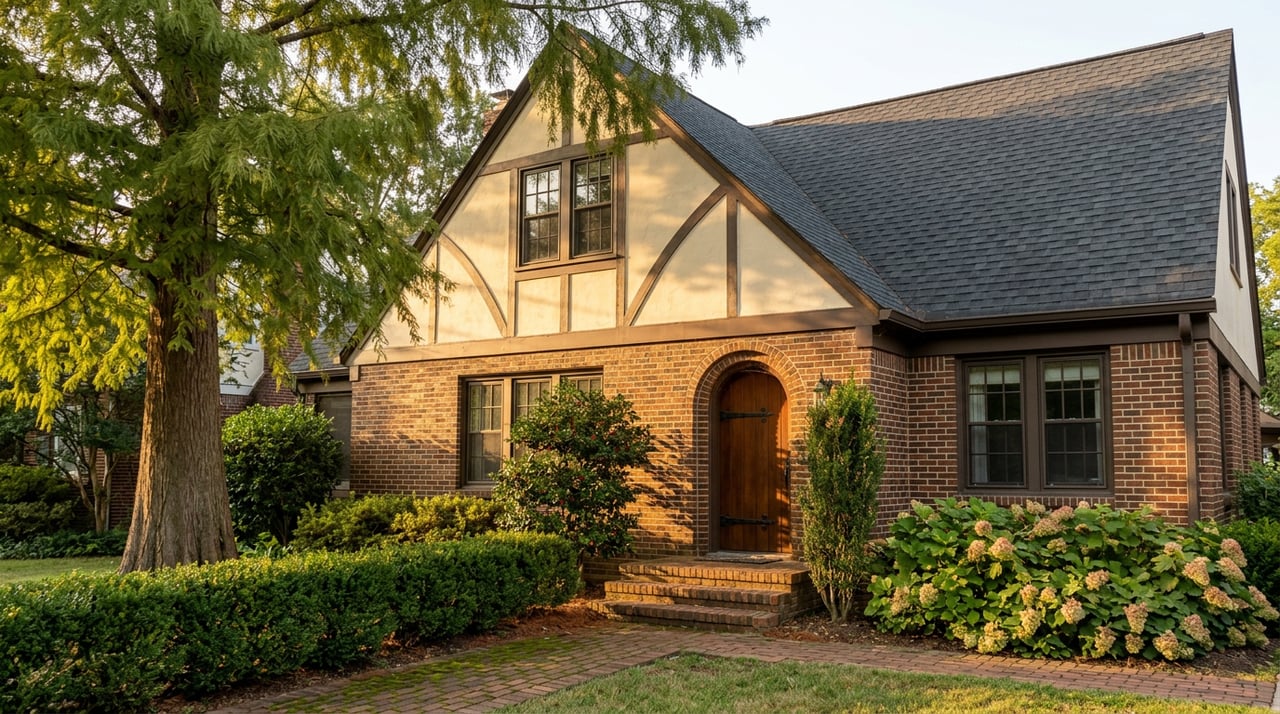
The gap that tells the real story sits between median and average. The same window put the average sale price at $585,240, well above the $435,000 median. That kind of spread usually means a handful of high-value sales are pulling the average up while most transactions cluster lower. In Avondale's case, that's consistent with what's on the ground: a 1922 Tudor featured on the Riverside Avondale Preservation home tour lists well above the segment's median, and a Prairie School home locally known as the Bootlegger House, fully renovated in 2015, commands a similar premium. Next door in Riverside, the same pattern shows up in a home that just finished a three and a half year renovation with Wolf and Sub-Zero appliances in the kitchen. These aren't outliers because of location. They're outliers because of finished condition and approved historic work.
Riverside's own numbers back this up from a different angle. A live tracker pulling twice daily from the local MLS put Riverside's median sale price at about $342,000, or $229 per square foot, as of June 15, 2026, with homes averaging 76 days on market, a buyer-leaning setup. That's a lower per square foot number than Avondale carries, inside the same joint historic district, governed by the same COA rules. Location inside Riverside Avondale doesn't set the price. Condition does, and condition is exactly what the COA process and the tax exemption both touch.
Before You Write an Offer on an Original-Condition Avondale Home
- Confirm local historic district status using the city's map tool before assuming National Register alone applies. Local designation is what triggers COA review.
- Budget renovation costs assuming a COA timeline, not a standard permit timeline, for anything touching windows, roofing, siding, or the exterior.
- If your project will need full Commission review, plan your submission six weeks ahead of the meeting you're targeting.
- Ask your closing team whether the Historic Preservation Property Tax Exemption applies to your planned scope of work, and get that application filed before permits are pulled, not after.
- Contact Riverside Avondale Preservation for contractor guidance and a walkthrough of the COA process. The nonprofit isn't the approving authority, but its resources are built specifically for this district.
A Few Quick Questions
Does every home in Avondale require a COA for renovation work? Only if the home sits inside the locally designated historic district and the work affects the exterior. Interior-only projects generally don't require review.
How long does COA approval take? Administrative approvals move faster than full Commission review. If your project needs to go before the Commission, plan on submitting roughly six weeks before the meeting date.
Can the tax exemption be combined with other savings? The Historic Preservation Property Tax Exemption applies specifically to the city's millage on the value added by rehabilitation. It's a separate program from homestead exemptions, so it's worth asking how the two interact for your specific property.
If you're weighing Avondale against another Northeast Florida neighborhood, the conversation worth having isn't about the median. It's about what a specific home needs, what that work will cost you in time, and what the city will let you claw back over the next ten years. Michael Wright and Suzi Ford walk buyers through exactly that math before an offer goes in, not after. Contact us to talk through what a specific Avondale address actually requires.