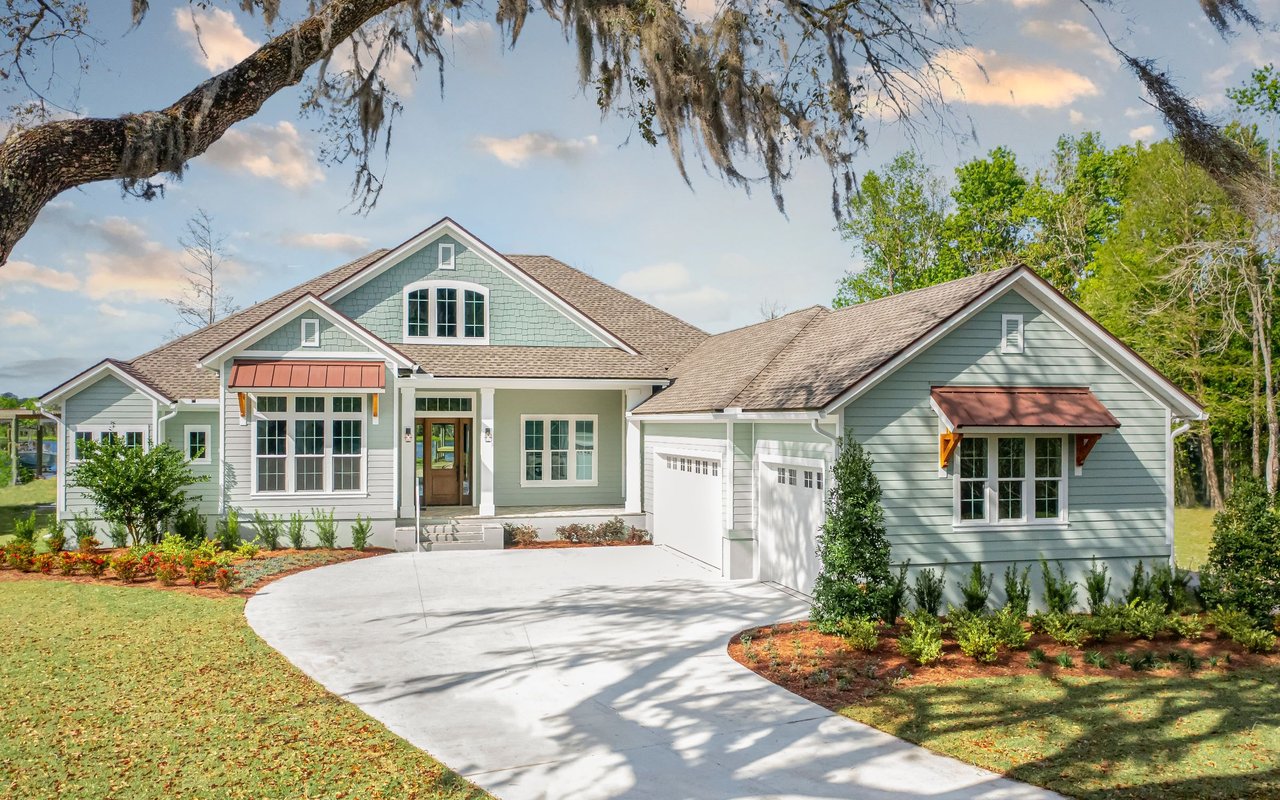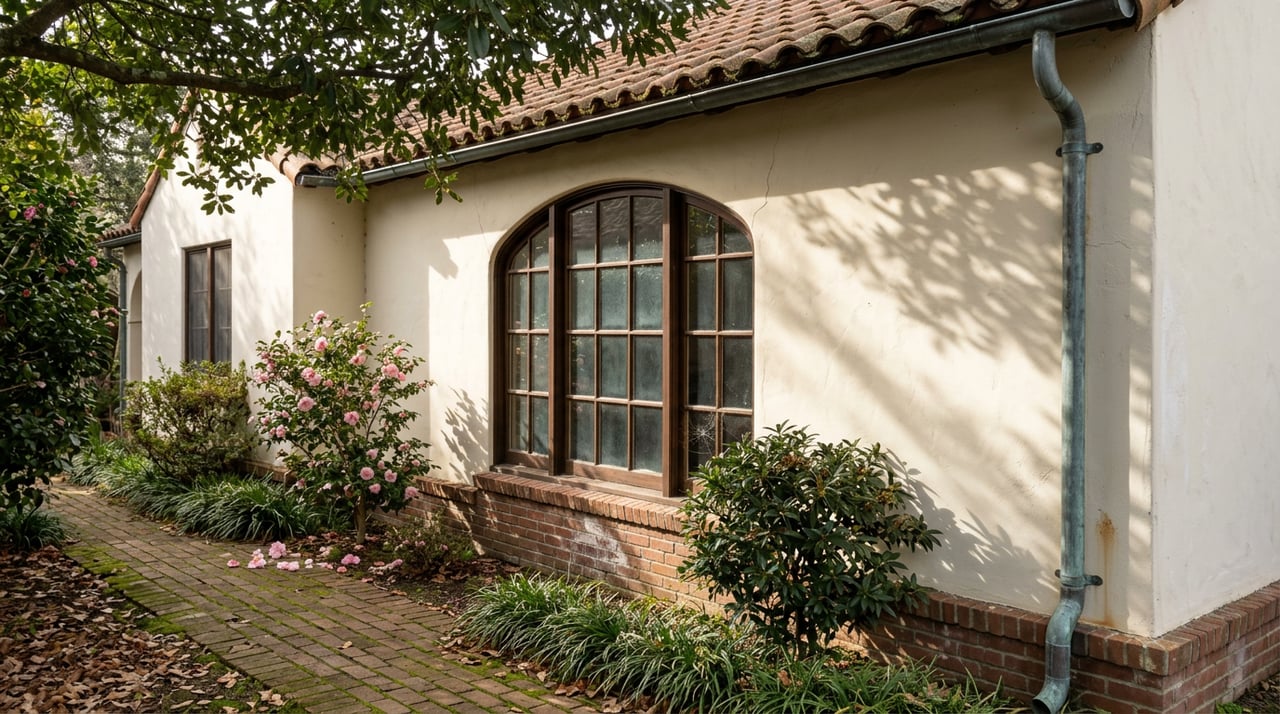
Picture two buyers touring homes on the same Saturday afternoon. One walks through a 1925 Mediterranean Revival on Ortega Boulevard with a failing roof and single-pane windows. The other tours a nearly identical house on St. Johns Avenue in Avondale, same era, same roof problem, same windows. Both buyers assume the renovation process will look the same because the houses look the same. Only one of them will need a city commission to approve the new roofline before a contractor can start.
That difference has nothing to do with the architecture and everything to do with a designation most listing descriptions never mention. Ortega and Avondale sit on the same peninsula system, share the same 1920s land-boom pedigree, and both show up on every list of Jacksonville's great historic neighborhoods. But one of them answers to a local preservation commission for exterior work. The other one, for the most part, doesn't.
The Difference the Listing Won't Show You
The city of Jacksonville draws a hard line between two kinds of historic status, and the line matters more to a renovation budget than almost anything else in the deal. National Register listing is an honorary designation approved by the U.S. Department of the Interior. It recognizes a property or district as historically significant, and it does not regulate what an owner can do to it. Local designation is different. Once the city council designates a landmark or historic district locally, any exterior change to a property inside it requires an approved Certificate of Appropriateness before work can start.
Most of Ortega falls into the first category only. The Old Ortega Historic District was added to the National Register of Historic Places on July 14, 2004, covering roughly 597 historic buildings east of Roosevelt Boulevard and north of Verona Boulevard. It has never received local designation. Avondale sits inside the larger Riverside-Avondale Historic District, which carries both the National Register listing and the local designation that comes with a Certificate of Appropriateness requirement.
Same river. Same architectural stock. Different rulebook.
What Actually Triggers a City Sign-Off
The Certificate of Appropriateness, or COA, isn't limited to additions and demolitions. Jacksonville's own planning department lists repairs, alterations, window replacement, new construction, demolition, and relocation as work requiring approval, along with site work like sidewalks and driveways. Here's how that plays out across the two neighborhoods:
| Renovation work | Old Ortega (National Register only) | Avondale (National Register + local designation) |
|---|---|---|
| Repainting exterior siding | No city approval needed | May require COA |
| Replacing windows | No city approval needed | Requires COA |
| Re-roofing | No city approval needed | May require COA |
| Adding a room or structure visible from the street | No city approval needed | Requires COA and often full Commission review |
| Replacing a driveway or sidewalk | No city approval needed | Requires COA |
| Demolition or relocation | No city approval needed | Requires COA and full Commission review |
Most COA applications in a locally designated district get approved administratively by planning staff. The ones that don't, including street-visible additions, new construction, window replacement in some cases, and any demolition, go to the Jacksonville Historic Preservation Commission, a seven-member body appointed by the mayor that generally meets once a month, on the fourth Wednesday. An approved COA is good for one year, and once work has actually begun, it extends to five years. None of that clock exists for a comparable project in Ortega.
The Ten-Year Trade Nobody Puts in the Listing Description
Here's the part that surprises buyers who assume less regulation is simply a win. Jacksonville offers a Historic Preservation Property Tax Exemption: a full, 100 percent exemption on the added assessed value created by a qualifying rehabilitation, running for ten years. It applies to the city portion of the tax bill only, not the county, school board, or other taxing authorities, and every dollar of proposed work has to be approved before it starts.
That exemption is written for local landmarks and properties inside locally designated historic districts. Ortega's National Register status doesn't qualify a homeowner for it, no matter how faithfully a rehab matches the original 1920s design. An Avondale owner restoring a Mediterranean Revival can offset a decade of city taxes on the value that restoration creates. An Ortega owner doing the identical scope of work gets none of that offset, because the property was never brought under local design review in the first place.
There's a separate federal program that does reach Ortega: Federal Historic Tax Credits are available for the rehabilitation of National Register properties, but only when the property is income-producing. That helps an investor converting a historic Ortega building into a rental or commercial use. It does nothing for an owner-occupant restoring a family home, which describes most of the buyers touring these streets.
What That Means for the Same Renovation Budget
Run the same $150,000 restoration through both neighborhoods and the paperwork diverges immediately. In Ortega, a contractor can pull permits and start work on windows, roofing, and siding without a COA application in the queue. In Avondale, that same scope needs a Certificate of Appropriateness before a single window comes out, and if the project includes a street-visible addition, it waits for a Commission meeting that only happens twelve times a year.
The upside on the Avondale side shows up later, on the tax bill, for the next ten years. The upside on the Ortega side shows up immediately, in the ability to move a renovation timeline without waiting on a public body's calendar. Neither path is better in the abstract. They're just different trades, and the trade is invisible until you're the one filling out permits.
The Neighborhood You're Actually Buying Into
Ortega's civic texture built up without a design review board policing every porch rail, and it still reads that way. The Florida Yacht Club, founded in 1876 and now in its third clubhouse after the original was lost to Jacksonville's great fire of 1901, remains a members-only anchor for the peninsula's older families. Timuquana Country Club's greens were laid out by Donald Ross and later reworked by Robert Trent Jones, giving the neighborhood a golf pedigree that predates most of Florida's postwar courses. In Ortega Village, Carter's Pharmacy has been filling prescriptions and serving lunch counter orders since 1955, a genuine holdover in a neighborhood that otherwise trades on architecture and river access. The Ortega River Bridge, a 1,143-foot bascule bridge that opened in 1927 and was rehabilitated in 1996, still carries the daily commute across the water that the neighborhood's original wooden 1908 bridge first made possible.
As of August 2026, Ortega's home prices reflect that mix of unregulated bungalow stock and grand river estates. Smaller historic homes start around $300,000, mid-sized properties run from the $450,000s into the $700,000s, and riverfront estates reach $1 million to $1.5 million and beyond, with a neighborhood median sitting in the low-to-mid $500,000s. Avondale's range runs from a more accessible entry point near its walkable Shoppes of Avondale commercial corridor up to figures that match or exceed Ortega's high end for the most completely restored architecture, a corridor that groups like Riverside Avondale Preservation have worked for decades to keep intact.
Before You Write an Offer in Either Neighborhood
- Confirm which side of the boundary your specific lot falls on. The Old Ortega Historic District's National Register line runs east of Roosevelt Boulevard and north of Verona Boulevard, which means a home in Ortega Forest, west of the highway, carries neither the National Register listing nor any COA requirement at all.
- If the tax offset matters more than the timeline, ask the city's Historic Preservation Section directly whether a specific Avondale or Riverside property sits inside the locally designated district and would qualify for the ten-year rehab exemption before you build that savings into your renovation math.
- If timeline matters more than the tax offset, ask whether your planned scope of work can be approved administratively by planning staff or requires full Historic Preservation Commission review, since street-visible additions, new construction, and demolition are the categories most likely to need a spot on that once-a-month agenda.
A Few Questions Worth Asking
Does National Register status without local designation affect my mortgage or insurance in Ortega? Not directly. Because National Register listing doesn't restrict exterior work, lenders and insurers generally evaluate an Ortega property the way they would any home of similar age and construction, with the usual attention to roof age, electrical, and plumbing systems that any pre-1950s home invites.
Can I use a historic tax credit on my Ortega home even without local designation? Only if the property produces income. Federal Historic Tax Credits reach National Register properties used as rentals or commercial space. They don't apply to an owner-occupied restoration, which is where the local ten-year exemption would normally come in, and that exemption requires the property to sit inside a locally designated district.
Is Ortega Forest included in any of this? No. The National Register boundary for Old Ortega runs east of U.S. 17 and north of Verona Boulevard. Properties in Ortega Forest fall outside that line, so they carry neither the National Register listing nor the Certificate of Appropriateness requirement that governs Avondale.
Comparing two historic Jacksonville neighborhoods on price per square foot alone misses the part of the deal that shows up six months after closing, when the first renovation permit gets filed. Michael Wright works with buyers across Ortega, Avondale, and the rest of Northeast Florida's riverfront neighborhoods who need someone to walk through exactly this kind of distinction before an offer goes in, not after. If you're weighing a historic property against the renovation plan you actually want to run, reach out and let's talk through what your specific address allows before you write the offer.