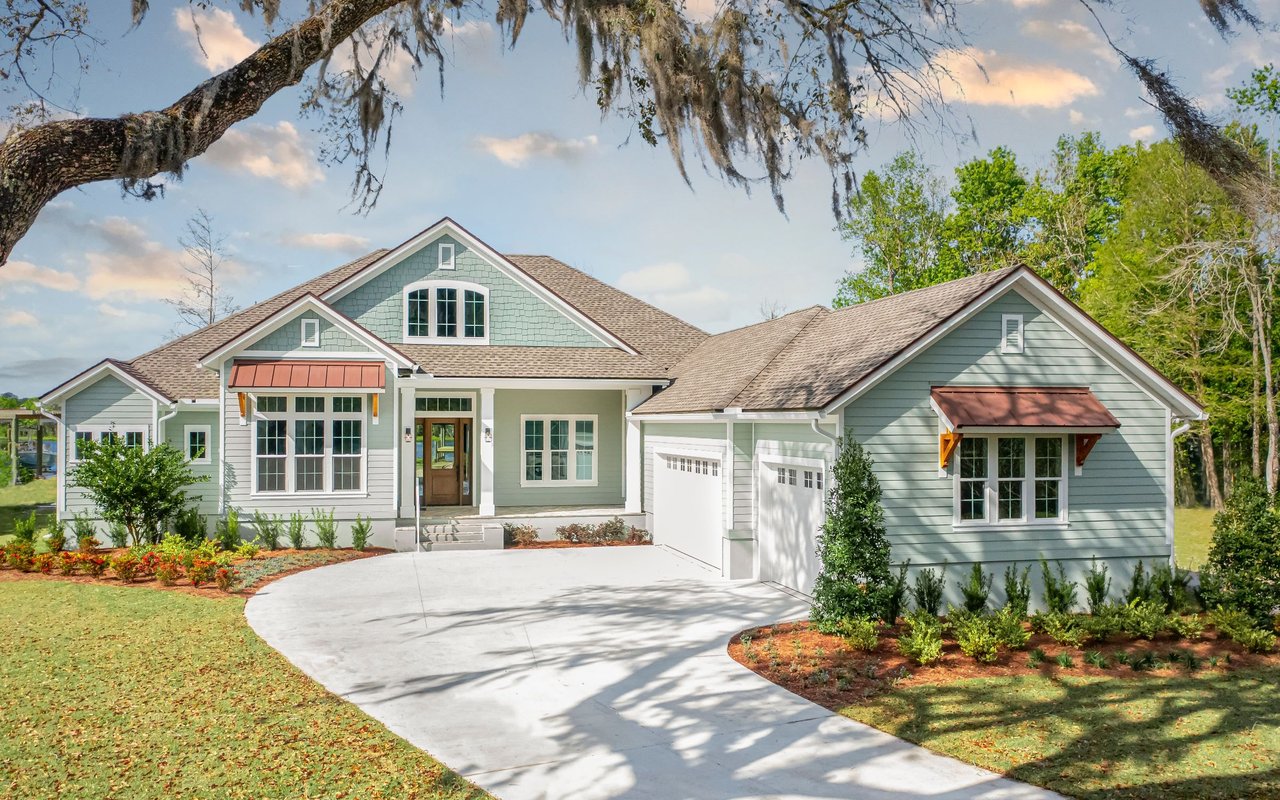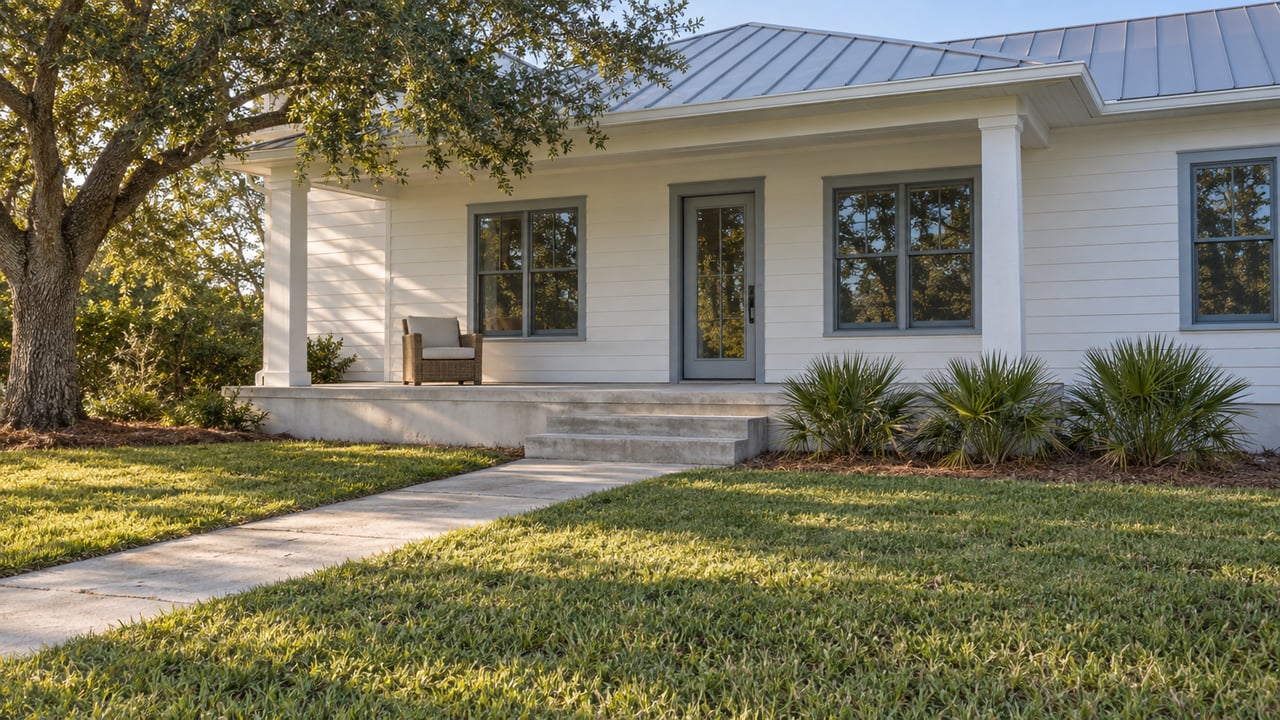
Two Atlantic Beach homes on the same block can already carry very different tax bills, because Florida resets a home's assessed value when it sells. On Nov. 3, voters decide Amendment 3. If it passes, a second dividing line arrives, and this one depends on where the owner lived on Dec. 31, 2026, not on what the house is worth.
For anyone buying at the Beaches this fall or early next year, that date belongs in the same conversation as the price. For anyone who owns a rental or second home in Atlantic Beach, the question is different. It's who covers the city's budget if homestead revenue shrinks.
The split Atlantic Beach bills already have
Under current Florida law, a change in ownership ends the prior owner's Save Our Homes benefit. The home is then assessed at just, or market, value as of the next January 1, with a few limited statutory exceptions listed in the Florida Department of Revenue's homestead brochure. Save Our Homes caps annual assessment increases on a homestead at 3% or CPI, whichever is lower, so a long-held home's assessed value can sit well below what it would sell for.
That's why the City of Atlantic Beach's own tax example uses a median homesteaded property assessed at $322,820. That number reflects years of capped growth. A buyer doesn't inherit it. The buyer's starting point is market value.
To claim a homestead, the owner must own the home and make it a permanent residence on January 1, and the current DOR homestead application says to file by March 1. Owners moving from another Florida homestead can transfer all or part of their accrued Save Our Homes difference through portability. To transfer it, the new homestead exemption has to be established within three years of January 1 of the year the old homestead was abandoned, and the transfer form is filed with the homestead application by March 1.
So the first dividing line already exists: long-time owner versus recent buyer. Amendment 3 would add another one on top of it.
The second split Amendment 3 would add
The enrolled text of CS/HJR 1F sets out a schedule. If voters approve it, here is what changes and when:
- Dec. 31, 2026. This is the residency cutoff. Owners who maintained a permanent residence in Florida as of this date fall under the larger exemption structure.
- Jan. 1, 2027. The non-school homestead exemption rises to as much as $150,000 of assessed value.
- Jan. 1, 2028. That exemption rises to as much as $250,000.
- Jan. 1, 2029. The standard exemption begins adjusting each year for inflation.
- On or after Jan. 1, 2030. A county or city may shorten the waiting period for new residents to address a critical local need, by a two-thirds vote of its governing body.
The waiting period applies to anyone who had not maintained a permanent residence in Florida as of Dec. 31, 2026. Under the text, those owners receive up to $25,000 against school levies and $50,000 against all other levies, with the $50,000 indexed starting in 2028. They move to the larger exemption beginning in their fifth year of exemption. The trigger is the fifth exemption year, which is not quite the same as five years after a moving truck arrives.
The cutoff is about residency, not closing dates. The City of Atlantic Beach's Amendment 3 information page says permanent Florida residents as of Dec. 31, 2026 qualify for the higher levels, including people who establish residency by then and buy property later. That puts a relocating buyer and a buyer moving across town in different positions, even if both close on the same day in 2027.
How that residency would be proven hasn't been settled. The Volusia County Property Appraiser's FAQ says administrative details may not be final until implementing legislation is enacted, and the amendment itself directs the Legislature to set uniform procedures. Today's homestead form already asks for items like a Florida driver license, vehicle tag and voter registration numbers, prior-residency dates and a declaration of domicile. It is not an Amendment 3 checklist, though.
This is general information, not legal, tax or financial advice. If your timing or residency could be affected, confirm your situation with the Duval County Property Appraiser and a qualified tax professional.
Where an Atlantic Beach tax dollar actually goes
The exemption only applies to some of the lines on the bill. Here is the City's breakdown for its median homesteaded example:
| Taxing authority | Millage | Annual tax | Share |
|---|---|---|---|
| City of Jacksonville / Duval County | 7.9012 | $2,156 | 44.4% |
| Duval County School Board | 6.3430 | $1,889 | 38.9% |
| City of Atlantic Beach | 2.7499 | $750 | 15.5% |
| Water Management District | 0.1793 | $49 | 1.0% |
| Inland Navigation District | 0.0270 | $7 | 0.1% |
| Total | 17.2004 | $4,851 | 100% |
The town on the mailing address collects about $750 of that $4,851. The largest share goes to the consolidated City of Jacksonville and Duval County. School taxes, nearly 39% of the bill, keep the existing $25,000 homestead exemption either way.
So for an Atlantic Beach homesteader, most of whatever the amendment changes would show up on the Jacksonville and Atlantic Beach lines. Jacksonville's side is large. Jacksonville Today reported in September that the Jacksonville Council Auditor projected a $200 million city revenue hit in fiscal 2027-28 and another $100 million the following year if the amendment passes.
Who covers the gap in a town that's nearly half non-homestead
This is the part a homestead buyer might skip and a rental owner can't. Atlantic Beach's property tax revenue for the General Fund in fiscal 2025-26 is $8,461,390. Of that, $4,586,073, or 54.2%, comes from homesteads and $3,875,317, or 45.8%, from non-homestead property.
Non-homestead property includes rentals, commercial property, vacation homes and vacant land. Amendment 3 would lower the yearly cap on assessment growth for that property from 10% to 5% for non-school taxes. School levies on it would stay uncapped. On paper that's relief. The City's own analysis adds a caveat. Its options for replacing lost revenue include raising millage, which would raise ad valorem taxes on non-homestead property. Replacing a hypothetical full loss of homestead revenue would take an increase of 1.4904 mills. The City's owner-type table says it plainly. The 5% cap slows assessed value growth, but non-homestead owners "could face higher tax bills" if local governments raise rates to make up for homestead losses.
The City has also cut spending ahead of the vote. On Sept. 28 the City Commission approved a fiscal 2026-27 budget that keeps the millage at 2.7499. The City describes it as the first General Fund decrease supported by property tax revenue, and the first net cut in municipal positions, in more than a decade. It eliminates three full-time positions and sets aside a separate $500,000 capital reserve for possible Amendment 3 impacts, with a mid-year review either way. The City also says residents may notice less frequent upkeep in public spaces, including sodding, turf, annuals, shrubbery and tree removal.
Three sources, one small city
| Source | Atlantic Beach estimate |
|---|---|
| City of Atlantic Beach, $150,000 step in 2027 | $1.06 million a year in General Fund revenue |
| City of Atlantic Beach, $250,000 step in 2028 | $1.84 million a year |
| Jacksonville Beach City Manager Mike Staffopoulos, Beaches Watch forum | About $1.9 million a year |
| Florida Policy Institute, EDR-based table | $4,033,558 in FY 2027-28; $10,014,293 in FY 2031-32 |
The published figures don't share enough assumptions to reconcile. What they agree on is direction. The Florida Policy Institute's table shows the loss growing over time, and the City's estimate rises between the 2027 and 2028 steps.
The Beach Gazette covered that forum, held at the Beaches Museum Chapel in Jacksonville Beach. Staffopoulos also put the losses at about $4.1 million a year for Jacksonville Beach and $1.4 million for Neptune Beach. He stayed neutral, as state law requires of city officials. The paper noted the panel included no one who supports the amendment. Rick Mullaney, executive director of the Haskell Public Policy Institute at Jacksonville University, said he opposes it and called it "very well intended." He added:
"The argument in opposition to it is not that tax reform isn't needed. But the cut here is so deep, it's so dramatic, the most in the history of Florida, it is simply too much."
Charles Chapman of the Florida League of Cities, the third panelist, also said he opposes the measure. Passage requires at least 60% of voters, and if approved the amendment takes effect Jan. 1, 2027. The City says the first changes would appear on August 2027 TRIM notices and November 2027 tax bills.
Questions to bring to an Atlantic Beach purchase this fall
- Where did you live on Dec. 31, 2026? If the amendment passes, that answer decides whether you start at $50,000 or at the larger non-school exemption.
- What is the home's market value, not its current assessed value? The seller's bill reflects their Save Our Homes history, and yours will start at market value.
- Do you have a Florida homestead to port? Portability has its own March 1 filing requirement and timing window.
- Will the home be homesteaded at all? A rental or second home gets the 5% cap but is exposed to any millage increase.
- Which line of the bill are you modeling? The school share doesn't change under the amendment, and the City of Atlantic Beach share is the smallest of the three main lines.
A few quick questions
Does Amendment 3 change Save Our Homes or portability? No. Florida TaxWatch and the City both say Save Our Homes limits and portability stay as they are. The City adds that personal exemptions for seniors, veterans, widows and widowers, and people with disabilities are unchanged.
Would it lower stormwater or solid waste fees? No. The City's FAQ says homestead exemptions apply only to ad valorem taxes, not to non-ad valorem charges like those.
Would it limit what local property taxes can pay for? Yes. The text limits county and city ad valorem revenue to listed categories, including public safety, schools, infrastructure such as stormwater, natural resources, debt service, employee retirement and government operations.
If you're weighing an Atlantic Beach home around this vote, Michael Wright and Suzi Ford can go through the listing's current tax history with you. We'll point out where the seller's bill and your future bill are likely to differ and help you put together your questions for the Property Appraiser and your tax professional before you write an offer. Contact Us to start that conversation.